Program Director’s Note - What I’ve Learned in 63 Years

Hi Everyone,
Last Friday, I turned sixty-three. It wasn’t a milestone birthday, but it seemed cool that I was born in ‘63 and was now sixty-three, which made the day special. And then there was pizza (Zeneli’s) and ice cream (Dairy Queen).
Being sixty-three means I’ve lived a long time. I’m older than iPhones, cable, and hybrid cars. At six, I saw Neil Armstrong walk on the moon and the Mets win their first World Series. At thirteen, I had my bar mitzvah and celebrated the bicentennial. At twenty-four, I got married, and at twenty-five, I started residency in Philadelphia. At twenty-nine, I became a dad, began fellowship, and moved to New Haven, and that was all before most of you were born.
I’ve been a doctor, lived in Connecticut, and worked at Yale for more than half my life. Over the years, I’ve learned about science, education, and medicine, but mostly I’ve learned rules for navigating life. Like these:
Assume the best: Most people are trying their best. Laziness, selfishness, and sociopathy are rare, especially in medicine. If someone disappoints you, don’t condemn them. Keep an open mind, be curious, and ask how you can help.
Be humble: The more I learn, the humbler I feel. I used to beat myself up over mistakes. I’ve since learned to welcome correction and cherish the brilliant people who teach me.
Put your head down: When I bike up hills, I look down at the road and just turn the pedals. The same goes for chart notes, inbox messages, phone calls, emails, MKSAP questions, and MedHub evaluations, which can get overwhelming, especially if you keep staring at the growing pile and put off getting started. Just like climbing hills, once you’re moving, the momentum builds, and before you know it, you’re at the top.
Speak Up: I was once told by a senior friend to watch out for my career and avoid confronting people more powerful than me. I’m glad I didn’t listen, though I’m also glad I read books on feedback, difficult conversations, and negotiation; reminded myself always to think the best of others (see above); and let myself be guided by the values that matter most, like high quality patient care and resident education.
Take care of yourself: I trained in the days of sleep deprivation and junk food, and I became so used to fatigue, cheesesteaks, and French Fries, that I forgot what it was like to feel well. You can’t be a good doctor, family member, or friend if you don’t sleep, exercise, socialize, and eat nutritious food. The same goes for seeing a doctor and/or therapist when your asthma flares and/or life gets overwhelming.
Get a life: It took me too long to learn I needed a life outside work. As a kid, I loved growing fruit trees in pots—eat orange, plant seed, add water, watch what grows—which turned into a love for growing vegetables.* These days, I’m all about biking, hiking, reading, writing, and eating. You can’t improve patients’ lives if you don’t have a life of your own.
Get over setbacks: I didn’t get into my first choice for medical school or residency, I’ve had articles rejected, and I was passed over for Chief Resident. When these and other setbacks happened, they crushed me, but looking back, none of them seem important.
Nourish friendships: I get texts every day from friends I’ve known since kindergarten, and over the years, I’ve made many more. My friends know me better than I know myself. We go to ballgames and eat pizza together, and we call each other all the time. Friendships sustain me.
Cherish family: I FaceTime with my 102-year-old mom every day, usually before leaving work. My brothers, sister, and I have a group chat, and last night I spent an hour talking to my sister before starting this Note. My wife, daughters, and future son-in-law mean everything to me, and I’m grateful they’ve stuck with me when work kept me from being the husband and father I should have been.
Do what you love: I wanted to be a teacher years before I went to medical school. If I wasn’t a doctor, I probably would have been an English or history professor. When I finished training, most faculty in academic medicine were focused on research, particularly basic science, which wasn’t my thing. I loved attending in the MICU and rounding with residents. In 2011, I hit the jackpot when I was asked to become program director. As a college student, I didn’t realize there was this thing called medical education, which has allowed me to do what I love every day.
Build Teams: When I was a kid I read Arrowsmith and a biography of Walter Reed, and, if I’m remembering correctly, they made me think of physicians as solitary heroes. But I was wrong. Clinical medicine and medical education are all about teamwork. If you wonder why I put so many hours into reading residency applications, tweaking rank lists, and ensuring our residency is known as a premier place to train, it’s because I’m building the team. It’s also why I encourage residents to lead committees and share ideas to improve our program. On effective teams, everyone contributes.
Keep Learning: I love Medicine Grand Rounds, Pulmonary Grand Rounds, and Noon Conference. I love national meetings. I love good articles, and looking up questions on UpToDate. I love when consultants teach us and when residents and fellows explain things to me. Medicine is more rewarding and fun when you learn.
Make Your Days Meaningful: I’m so sad when people say they’re too busy to teach, sit with patients, or get to know their colleagues. There’s always time. It doesn’t take long to make teaching points, point out physical exam findings, and explain your reasoning. It doesn’t take long to answer patients’ questions and offer healing words. And it doesn’t take long to ask residents about their lives. Of course, our days can be long and overwhelming, but they don’t seem nearly so long and overwhelming when you make them meaningful.
Lean into frustrations: For intensivists, navigating end-of-life conflict can be a source of frustration and for some of us, burnout. As a young attending, I dealt with this challenge like I do most challenges: I read. I devoted much of my scholarship to medical ethics and the psychological, spiritual, and social burdens faced by patients’ families. The time I spent reading left me feeling less frustrated and more in control when conflicts arose.
Know Yourself: I’m intimately familiar with my shortcomings. I can be obsessive, I underestimate the time needed to finish projects, I hesitate to seek help, and I often lose track of tasks. At sixty-three, I’ve finally learned that not all problems can be solved, certainly not immediately. I’ve learned to be more realistic about time management, to organize tasks (I use “Todoist”), and to ask (and empower) others to help. I wish I’d learned earlier to accept my limitations rather than pretend they didn’t exist.
Make the World Better: There is a Jewish concept called Tikkun Olam, which refers to an imperative to improve the world. If I can use my limited time on Earth to help vulnerable people, then I’ll consider my life well spent. As doctors, our ability to improve patients’ lives is also our greatest opportunity.
Embrace Timeless Truths: Most of you share my concern about the direction the world is taking. But today’s direction doesn’t determine tomorrow’s destination. Time has taught me that, ultimately, war yields to peace, selfishness succumbs to generosity, and hatred loses to kindness. Sixty-three years gives you that kind of perspective.
I’m grateful and more than a little lucky to have been alive this long and to learn some lessons along the way. Thank you for helping me learn.
Enjoy your Sunday, everyone. Heide has a huge birthday surprise planned for me today, and I literally have no idea where we’re going or what we’re doing.
Mark
*Family lore has it that my sister told my mom when I was twelve that I might grow up to be a farmer, but Mom quashed that idea and said I was going to be a doctor. Like most Siegel family lore, this story is true.
P.S. Friday is Match Day. I can’t wait to share the names of our new interns!
P.P.S. What I’m reading and listening to:
The Pill That Works Even When You Know It’s Fake Nir Eyal On Plain English with Derek Thompson
The Death Penalty Is Even More Horrifying Than You Think By The New York Times Editorial Board
We Have Reached End Stage Polarization By David French
Yale’s New Healthcare Affordability Lab Melds Research and Policy To Cut Medical Costs By Liese Klein
Health Consequences of Immigration Enforcement in U.S. Communities By Melissa Arguello Belli, M.D.
They Feel Bugs Inside Them. Doctors Don’t Know Why. By Alexandra Sifferlin
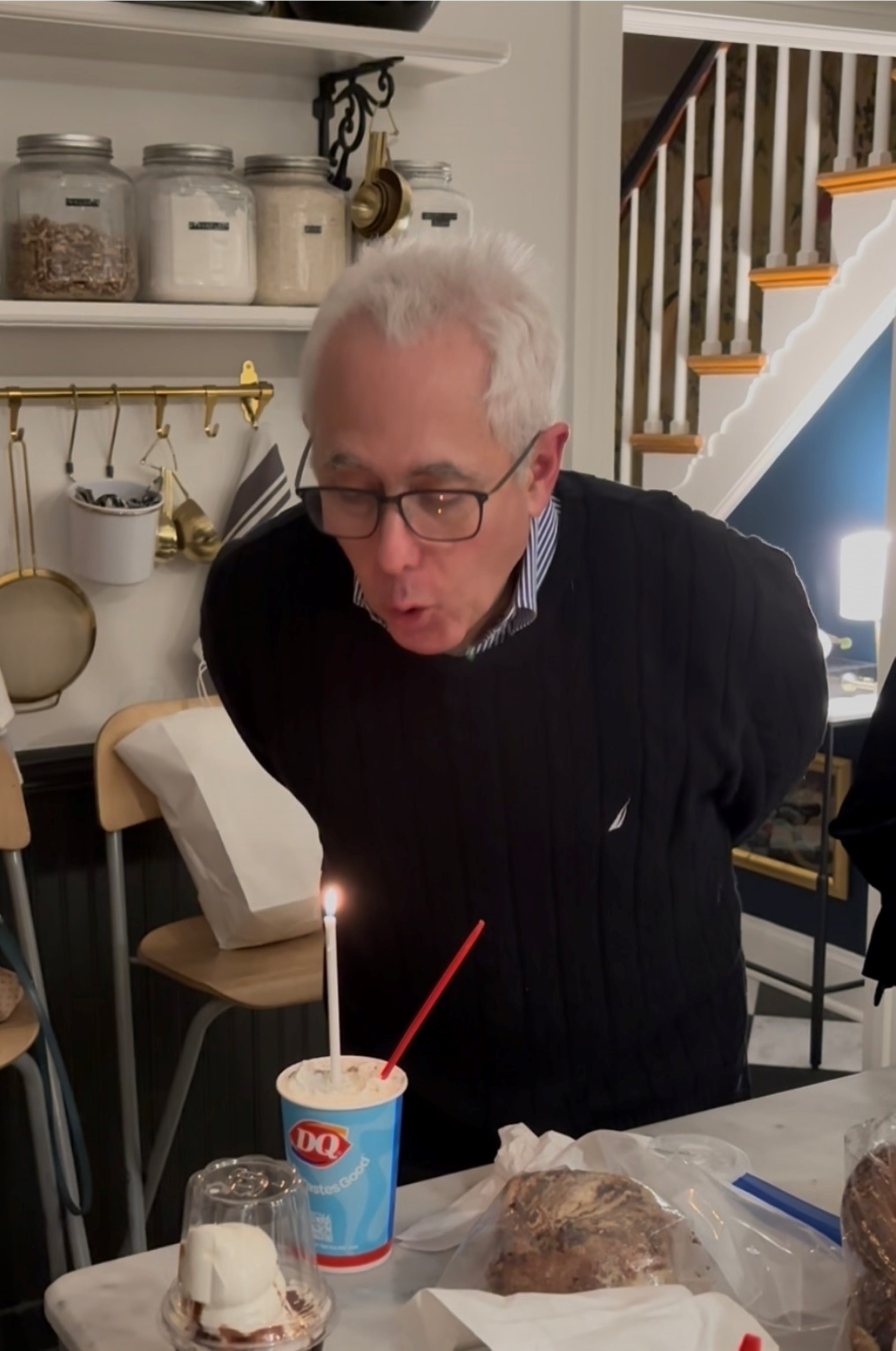
Birthday Dairy Queen
Enjoyed reading your birthday musings🍷
Belated happy birthday, Dr. Siegel. Thank you for sharing such thoughtful perspectives!